
Search Orange County Civil Dockets
Begin at Indiana MyCase. The Case tab takes a cause number or a cross-reference. Prefer a name? Use the Party tab, and trim a long result set with its file-date and status filters. Pick Orange Circuit or Orange Superior. Run both when the cause number is unknown, since local rules split civil assignments and cases can transfer between courts.
- Use the exact Orange cause number when available.
- Otherwise search the party or business name with a date range.
- Confirm court, case type, file date, and current status date.
- Read recent events, judgments, and any public linked documents.
- Ask the Orange County Clerk for a missing public filing or certified copy.
Call the Clerk at 812-723-2649 or visit the public counter. The state directory places the Clerk and Circuit at 1 Court Street, Paoli. Superior sits at 205 East Main Street, Suite 16. Orange County posts no official online form for copy requests. Ask the clerk directly. Ask about inspection, mail, payment, and delivery options. Indiana's court-record request guide sends all requests to the clerk of the court where the case was heard.
Orange County Civil Docket Codes
The Orange local rules, effective January 1, 2026, give Superior several defined civil tracks. Every Indiana cause number opens with two letters marking the case type. The code 59D01 marks Orange Superior. That label helps route your docket search. It says nothing about who won or what is owed now.
| Code | Orange Superior assignment | Key caution |
|---|---|---|
| SC | Small claims up to $10,000 | A docket is not a certified judgment. |
| PL | Plenary civil up to $10,000 | The amount is an assignment ceiling. |
| CC | Civil collection up to $10,000 | Check later satisfaction entries. |
| MI | Miscellaneous civil up to $10,000 without injunction | Use the actual relief and order. |
| EV | Eviction matters | Verify the latest hearing and order. |
| DC/DN | Domestic filings from July through December | Access can be restricted. |
Everything else in civil generally lands in Circuit, subject to exceptions and transfers. Probate causes are their own world. Codes like EM, ES, EU, GM, GU, and TR carry distinct procedural purposes, so resist flattening them into a generic civil label.
What Orange Civil Dockets Show
An Orange County civil docket is a timeline, not the whole case file. One entry list can show a lot. It can show the court, cause number, case style, parties, attorneys, filing date, status date, claims, settings, service events, motions, orders, judgments, payments, and links to filed papers. A short event title often stands for a longer document behind it. What appears online varies case by case.
| Case style | The court caption naming the parties. |
|---|---|
| Case type | The procedural track, such as SC, PL, CC, or EV. |
| Service event | A return or notice entry; read the filed proof for detail. |
| Setting | A scheduled hearing that can later move or be vacated. |
| Judgment | The court's operative decision, subject to later activity. |
| Satisfaction | An entry that may show a judgment was paid or released. |
Not every court record in a case is public. The MyCase access matrix sets out which nonconfidential orders and documents can appear online and which stay off the statewide display.
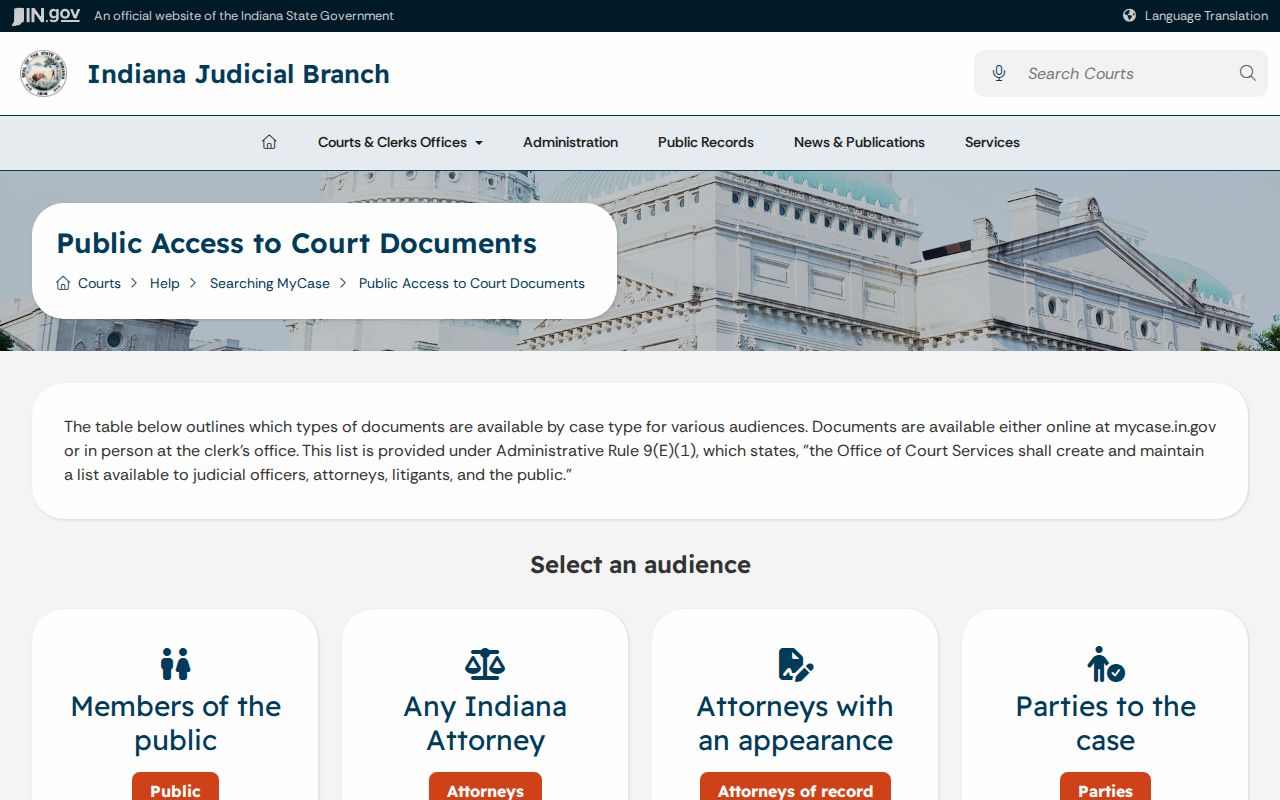
A listed event and a downloadable document are separate forms of access.
Orange Civil Docket Status Changes
A "Closed" label describes current status only. It does not settle the whole dispute. A money judgment can pick up later payment, satisfaction, release, correction, or enforcement entries. A dismissed claim can still carry costs or spawn a related matter. So read past the first judgment line. Weigh the status date against the newest event. Small-claim and collection searches invite exactly this error. The amount first sought proves neither the amount awarded nor the amount now due. When those facts matter, request the judgment and any later satisfaction. A certified copy authenticates a court paper. It is no substitute for reading later docket activity. For official copy and accounting references, the state clerk resource is the place to turn.
Check the tail of the docket. Later satisfaction, release, modification, or enforcement entries can change how an older civil judgment should be understood.
Orange County Civil Docket Types
Civil dockets in Orange County span contract and collection disputes, property claims, small claims, evictions, domestic matters where public, and other plenary or miscellaneous actions. Circuit keeps the residual civil jurisdiction. Superior keeps only the limited categories listed in the current local rule. When in doubt, the cause number itself is the safest guide. Some categories need extra care. Domestic relations and protection-order material can be restricted even while other civil cases sit in plain view. Probate runs on its own codes and procedure. An eviction docket may bundle a possession hearing, a money claim, an order, and later payment activity. Those pieces should stay distinct. Remember that a complaint is only an allegation. The judgment or dismissal is what states the court's action.
Orange Civil Docket Eviction Dates
Eviction cases, filed as EV matters, go to Orange Superior. Their settings move fast. Stale search results can mislead anyone relying on a hearing date or writ status. Find the case in MyCase. Compare the newest event with the latest order. Call the clerk before counting on any date. An old calendar entry does not confirm a current lockout date. For what was actually said at a hearing, ask the court reporter about a transcript. Do not treat the docket as a verbatim record. Two rules frame this. Indiana Administrative Rule 9 governs public calendars and docket data. Orange's local continuance rule governs how a party asks to move a setting. A request alone moves nothing until the judge acts on it. For the local confirmation sequence on time-sensitive settings, see the Orange County court calendar. Note: For any Orange eviction setting that may have changed, rely on the latest filed order. Confirm directly with the court.
Orange County Civil Docket Hearings
Civil settings come in many forms. A docket line might be a status conference, a motion hearing, or a pretrial conference. It might also be a bench trial, a jury trial, a small-claims hearing, or an eviction hearing. The entry can carry a date, time, judge, and description. Yet it stays subject to later order. Entries filed after the setting matter most. A reset, continuance, cancellation, or disposition appears there rather than on the original setting line.
Orange local rules govern continuances. A written request must state the grounds and describe contact with the other side. It must say whether that side consents or objects. File it as soon as possible, and generally no later than seven days before the setting. A supporting affidavit can explain why the request came later. Small claims has a stated affidavit exception. One caution: sending the request never excuses attendance unless the court actually grants it.
Orange Civil Docket Document Gaps
Some Orange civil case types allow broader nonconfidential document access through MyCase. These include CC, PL, and SC. Even so, a complaint, exhibit, service return, financial statement, or settlement paper may be restricted, redacted, never digitized, or obtainable only from the clerk. Treat the case summary as a starting point. It is not a promise that every filing will be downloadable. The official request guide on that page points the public to the clerk of the court where the matter was heard.
Name the filing you want and give a date range. That works far better than a request for everything, and the clerk can tell you which version is public.
Orange County Civil Docket Access
Access to Court Records Rule 4 sets out the public-access presumption.
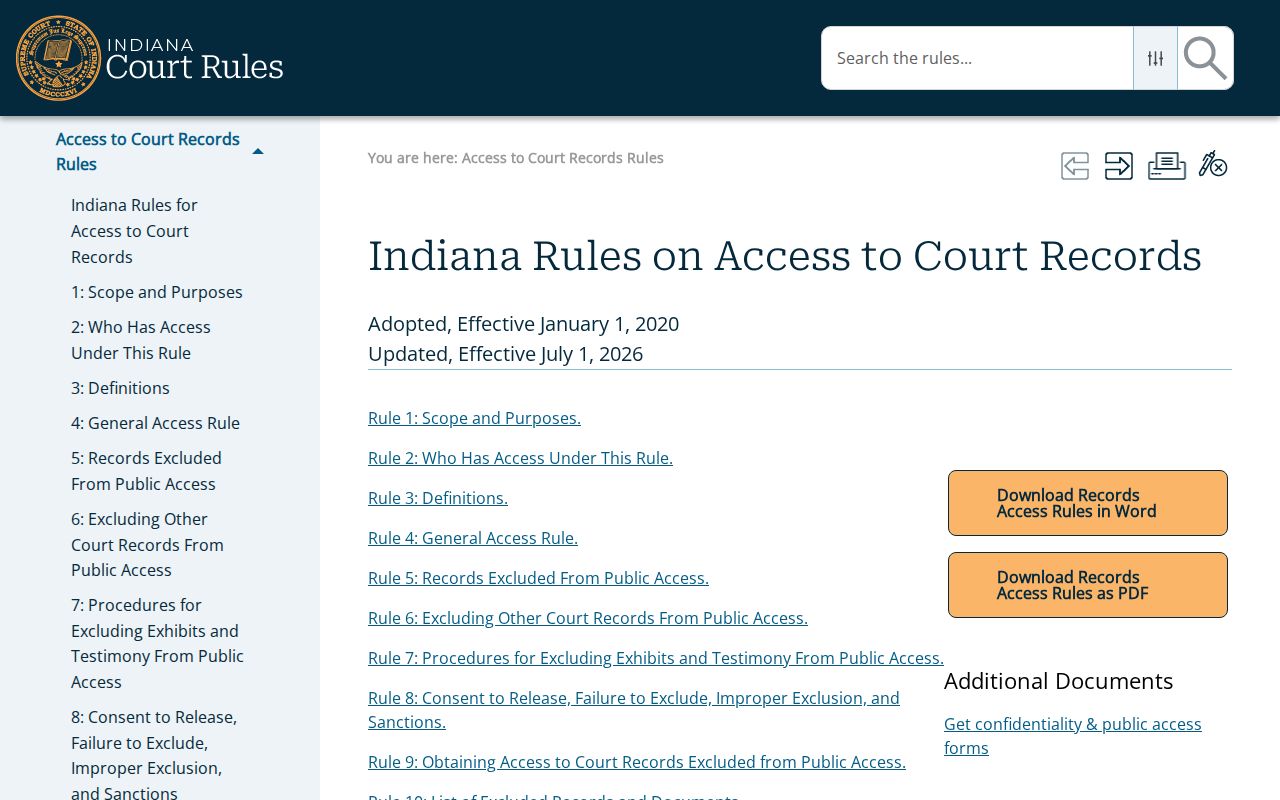
Rule 5 then carves out confidential categories and protected information. A public case can hold a nonpublic filing, and a redacted version may be the only one released.
Indiana Code also contains the Access to Public Records Act, whose official current-law source appears through this link.
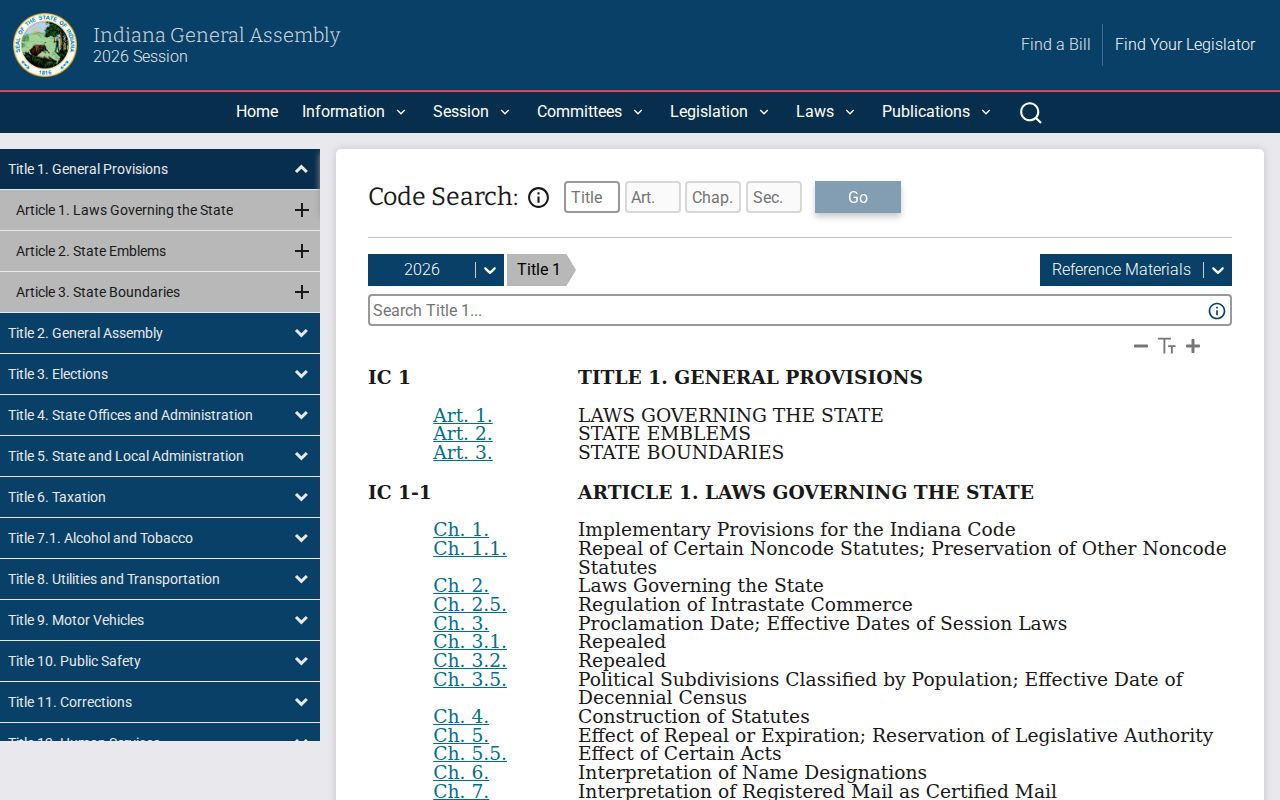
APRA does not override the judiciary's court-record restrictions. Apply the court rules to case records, and APRA only to the public-agency records it governs.
Extraordinary Orange Civil Docket Access
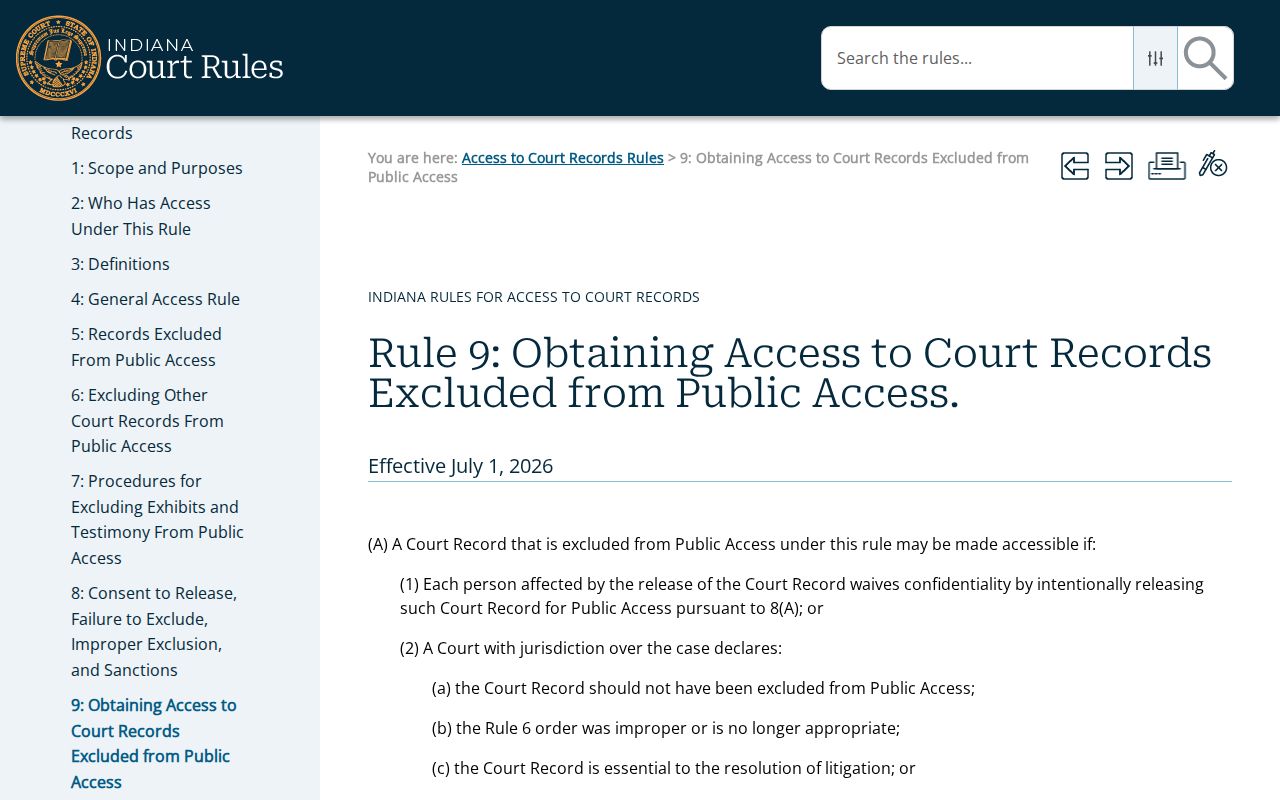
What if a filing is excluded under Rule 5? Access to Court Records Rule 9 offers a separate route: a verified written request and a judicial process. Notice may be required, along with time to respond, a public hearing, and clear-and-convincing proof. It is not a faster copy request. Access is never guaranteed. The official Rule 9 source marks out that distinct path.
For an ordinary public document, start with MyCase and the Orange County Clerk. For confidential or excluded material, find the exact rule that applies. Follow the court's process instead of guessing at contents from a missing link.
Protected civil records. Domestic, mental-health, protection-order, and personal-data filings may have limited or no ordinary public access.