
Search Orange County Criminal Dockets
Indiana MyCase is the fastest free way into an Orange County criminal docket. Got a cause number, citation number, or cross-reference? Type it into the Case tab. A name works too: choose the Party tab, enter a last and first name, and set the Court filter to Orange Circuit or Orange Superior. If the name is common, add a status or file-date range to cut the noise. MyCase caps very broad results. It shows a CAPTCHA after repeated searching, so tighten the query instead of pushing past that control.
- Search the exact cause number and preserve each digit.
- If needed, search a party name in both Orange trial courts.
- Verify the court, case type, file date, status, and status date.
- Read the newest events and linked orders, not just the header.
- For a missing item, contact the Orange County Clerk with the case and document details.
The clerk handles inspection, plain copies, and certified dispositions. Call 812-723-2649 or stop at the counter. The state directory places the Clerk and Circuit Court at 1 Court Street in Paoli, with Superior at 205 East Main Street, Suite 16. Orange County posts no public copy-order form, so confirm mail, payment, and delivery terms with the clerk before sending anything.
Orange County Criminal Docket Codes
An Indiana cause number tells you at a glance which court is handling the case. Orange County carries code 59 under Administrative Rule 8. A Circuit docket begins with 59C01, and a Superior docket with 59D01. The old County Court prefix 59E01 still shows up in legacy history. That office no longer exists. The Rule 8 page spells out the full cause-number framework for every county.
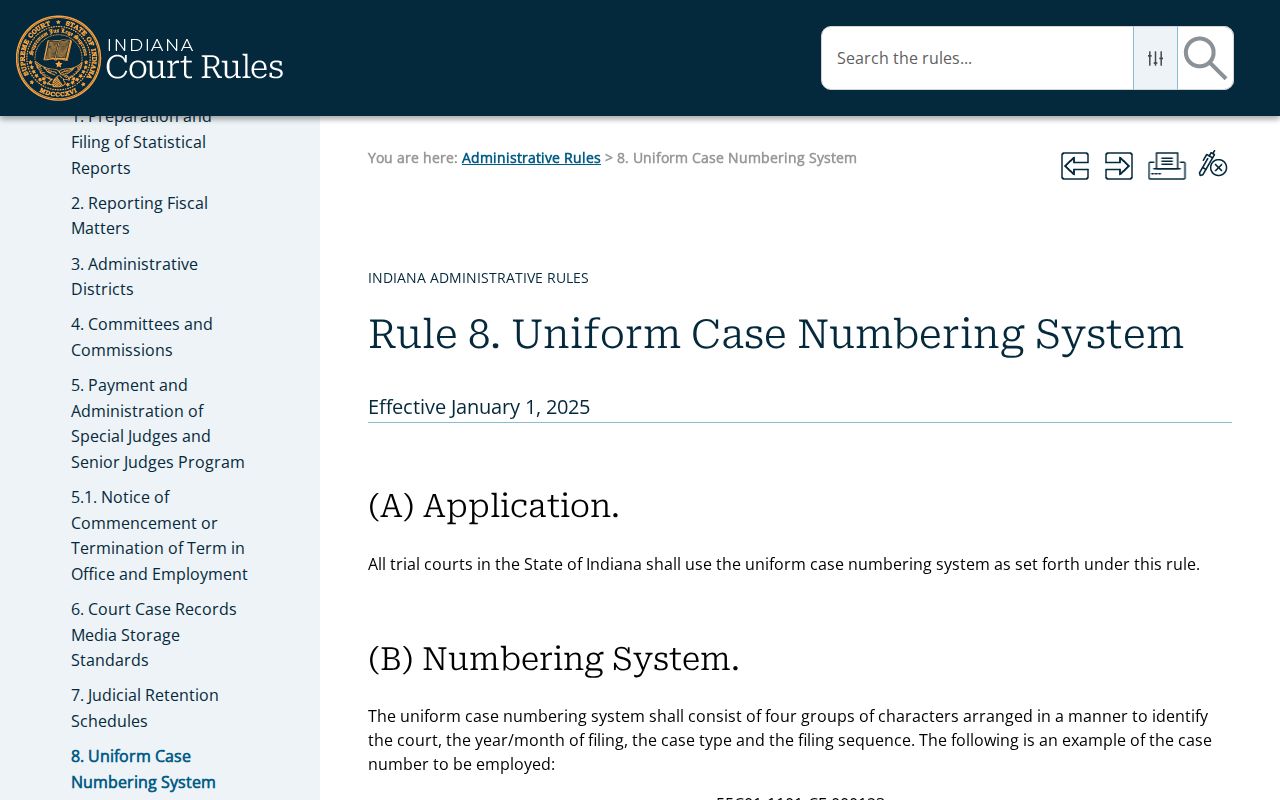
It helps you separate county, court, filing period, case type, and sequence before you read any event.
- CM
- A misdemeanor type assigned locally to Orange Superior.
- F1 through F6
- Felony classes, not findings of guilt.
- MC
- Miscellaneous criminal work, including search warrants.
- RF
- A red-flag matter that may have access limits.
- XP
- An expungement type with access that varies by status.
What Orange Criminal Dockets Show
Open an Orange County criminal docket and you get a grid of fields. Each field does one job. The cause number, court, file date, case type, and style sit at the top. Parties, lawyers, citations, charges, bonds, cross-references, and dated events fill out the middle. Financial objects, flags, and document links appear too. Read them with care. A charge is only an allegation. An event entry only shows what was filed or entered on that date. The result comes later. A disposition records the outcome, while an order or judgment carries the court's operative text.
| Case header | Court, cause number, type, filing date, status, and status date. |
|---|---|
| Charge | The filed allegation and class, subject to amendment or dismissal. |
| Event | A filing, setting, order, plea, disposition, or other dated entry. |
| Disposition | The court-recorded result, read with the actual order. |
| Document | A linked public filing or order when available remotely. |
Keep MyCase in perspective. It is a public case summary, not a criminal-history certificate. Police, prosecutor, federal, BMV, and out-of-state systems all sit apart from it. So note the source date. Confirm identity from the case itself, and only then draw a conclusion about any Orange County court docket entry.
Orange Criminal Docket Charge Results
A case type or charge tells you nothing final. Filings get amended, dismissed, diverted, deferred, tried, or resolved by plea. A closed status never says which count ended which way. Trace the event history all the way through. The newest disposition, judgment, and sentencing order hold the real answers in an Orange County criminal docket. When you need an official result, request a certified disposition from Elizabeth Jones, Orange County Clerk. Name the cause number and the document you want.
Access rules can change. The Indiana rules-orders page is the checkpoint that publishes those rules.
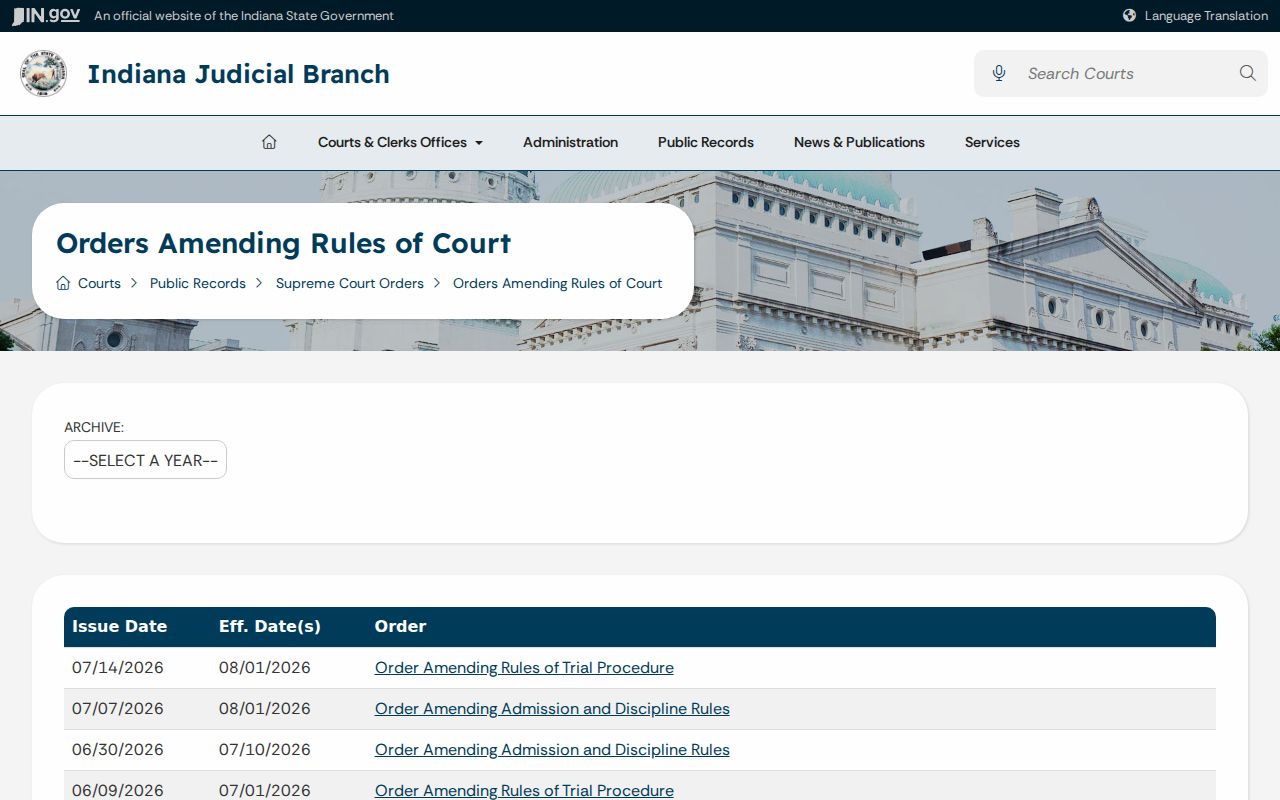
The latest rule text controls public access, redaction, and restricted material.
Read the whole result. Match each charge to its disposition, then check for later orders, modification, or expungement activity.
Orange County Criminal Docket Stages
An Orange County criminal docket often develops in sequence, though not every case uses each stage. Filing → Arraignment → Pretrial → Plea or Trial → Disposition → Sentencing. A transfer, continuance, motion, bond review, or special-judge entry may appear between those points. A setting is only a scheduled event until the court acts.
Arraignment is the early hearing where charges and plea matters may be addressed. Later pretrial entries cover discovery, motions, plea talks, or scheduling. Then the disposition answers how a charge ended. Sentencing follows a conviction where required. One caution: a short event label rarely holds all the terms. Open any linked order. Never assume what the court decided in an Orange County court docket.
The official Trial Rule 5 source addresses filing and service in civil practice. It cross-references confidential handling that can matter when records overlap.
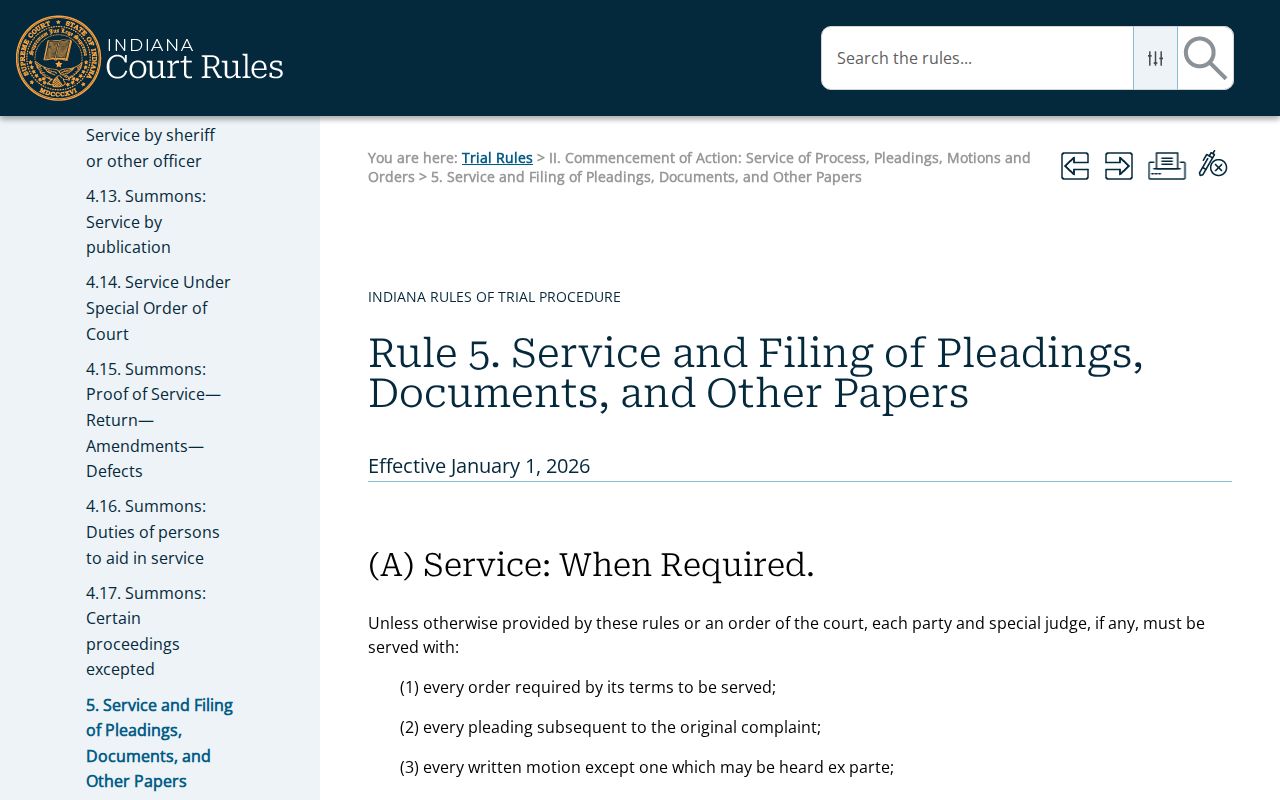
Remember that a public docket entry only shows what the clerk discloses; confidential material filed behind it stays sealed from view.
Orange Criminal Docket Assignment Split
Under the Orange local rules, misdemeanors and Level 6 felonies land in Orange Superior. The rules were updated January 1, 2026. A serious-charge exception can override that. Every other felony belongs to Orange Circuit. When a lower count is filed alongside a more serious felony for the same defendant, the whole case can ride along in Circuit. Search warrants and other miscellaneous criminal matters may be filed in either court.
| Orange court | Criminal docket work | Search key |
|---|---|---|
| Superior | Misdemeanors and Level 6 felonies, with exceptions | 59D01 |
| Circuit | Other felonies and serious joined charges | 59C01 |
| Either court | Miscellaneous criminal and some red-flag matters | Actual cause number |
A transfer or a later court order can shift the route, so the offense name alone will not settle it. Read the current case header on the Orange County court docket instead.
Orange County Criminal Docket Courts
One clerk serves both Orange County trial courts. The Orange County Clerk's single structure does not merge their dockets, though. Orange Circuit and Orange Superior keep separate court identifiers, assignments, judges, and event histories. Search both courts when the cause number is unknown or the case may have moved. The Indiana Courts Orange County page links the local rules, MyCase, e-filing resources, and contacts. A state appeal belongs to the Court of Appeals of Indiana or another appellate court. It never sits on the county trial docket. A federal criminal case sits in the U.S. District Court for the Southern District of Indiana, New Albany Division. Reach it through PACER and CM/ECF. This quick check saves a real case from looking missing. A case only looks missing because the wrong system was searched.
Orange Criminal Docket Sentencing Orders
The MyCase document-access matrix draws a line. It separates the case summary from the papers behind it. F1 through F6 and MR cases are limited online. What most people can reach are sentencing orders. CM dockets sometimes allow the same. What you actually see depends on the case, the document, redactions, and the current rules.
A missing PDF is not proof that nothing was filed. The Orange County Clerk may still have a public, redacted, in-person, plain-copy, or certified version. Want the words spoken at a hearing? That takes a court reporter and a transcript. A transcript is not a docket sheet, and Orange local rules set reporter rates separately.
Note: Online access can be narrower. A nonconfidential record may still be open at the Orange clerk's counter.
Orange County Sealed Criminal Dockets
Access Rule 4 opens with a presumption of public access. Rule 5 names confidential records and protected data. Handle juvenile, mental-health, protection-order, red-flag, sealed, and expungement matters with care.
Restricted records. Absence from MyCase is not proof that a case never existed or is sealed.
Ask the Clerk what public version exists. A verified request under Access Rule 9 uses a court process and is not a routine copy order.
Indiana's Access to Public Records Act covers public-agency records but cannot override court confidentiality rules. Use the right rule set.
Missing Orange Criminal Docket Results
An empty Orange County docket search can mean many things. The name may be misspelled. A results cap may have cut the list short, or the case sits in the wrong Orange court. A transferred cause number can hide a case. So can a filing too new to post, restricted access, or an expungement. Some records simply live outside MyCase. Work the problem: pull the cause-number history, narrow the date range, try name variations, and check both Orange trial courts. If nothing turns up, contact the clerk with every detail you have.
Never automate around CAPTCHA. And never read "no public result located" as "no record." Federal cases run through PACER. Driver records sit with the BMV. The Orange County case search walks through the official name and number fields in more depth.